WHAT HAPPENED?
Your live test will explain how much road disappeared before braking even started.
REACTION + BRAKING SIMULATOR
Set the conditions. Watch the road. When something changes, brake when you think you need to. Then see how much distance your reaction used.
01 / DRIVE
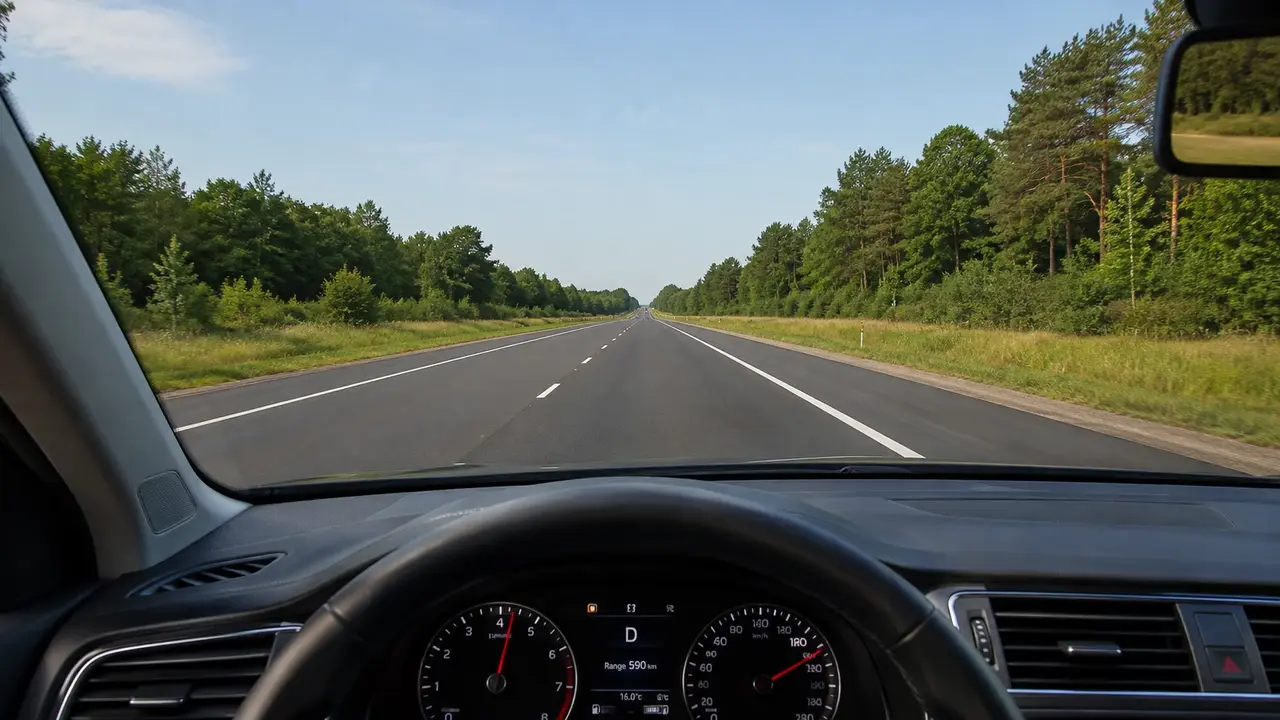
Each scene has a different road condition and hazard. Your reaction time is measured from the moment the hazard begins.
Set your conditions. Then start the test.
YOUR RUN
Your reaction and stopping breakdown will appear here after the run.
WHAT HAPPENED?
Your live test will explain how much road disappeared before braking even started.
BIGGEST FACTOR
We’ll compare speed, your reaction, and available grip.
TRY NEXT
Run once first. Then change just one thing and compare.
02 / EXPERIMENTS
These reference comparisons use a fixed 1-second reaction so you can isolate what speed and grip do to stopping distance.
Dry road · new tires · 1.0s reaction
70 km/h · new tires · 1.0s reaction
70 km/h · dry road · new tires
03 / LEARN
The car is still moving while you react.
The car keeps moving from the moment a hazard appears until you actually begin braking. Higher speed means more road passes underneath you during the same reaction time.
Once the brakes are applied, speed and available grip determine how much more road the vehicle needs before it stops.
Real stopping distances vary with the vehicle, brakes, tires, road, weather, slope, driver, and many other conditions. Do not use these results to choose a real-world driving speed or following distance. Follow local road rules and actual conditions.